
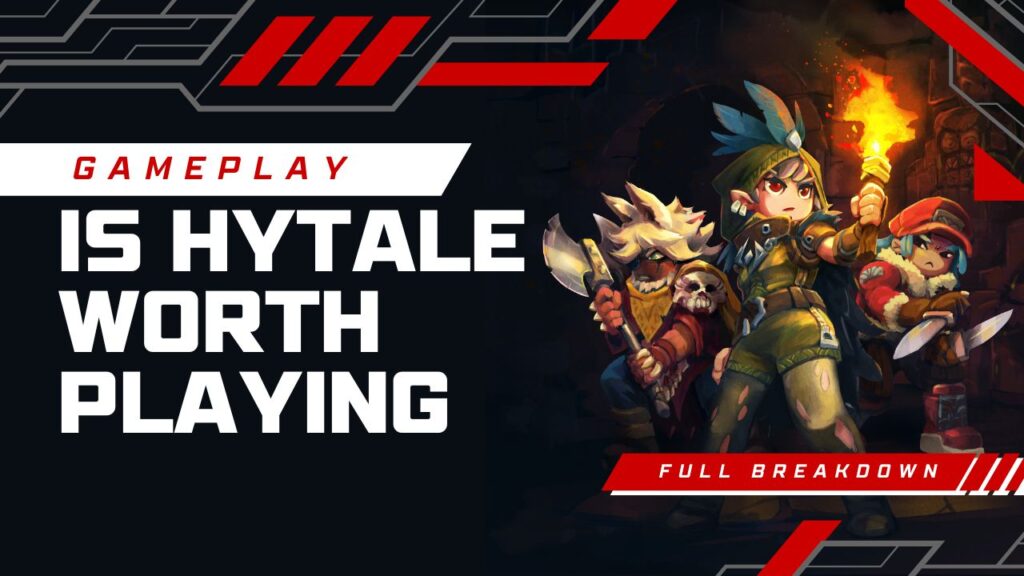
Hytale spent over a decade on the verge of arriving. It was announced in 2018 with a trailer that pulled in tens of millions of views, then disappeared into delays, an acquisition, and a full cancellation in mid-2025. Most fans had written it off. Then the original creators bought the game back, rebuilt the team, and shipped it into Early Access in January 2026. Now the obvious question for anyone who followed that saga is whether Hytale is actually fun to play yet. Let’s break it down.
The Decade-Long Road to Launch
If you only know Hytale from the original 2018 trailer, the version available right now will look familiar but feel different. The studio that made that trailer, Hypixel Studios, was acquired by Riot Games in 2020 and spent years rebuilding the game on a new C++ engine. In June 2025, Riot scrapped that work when it shifted priorities and ultimately cancelled the project.
What happened next is the part most fans didn’t expect. In November 2025, Hytale’s original founder bought the game back, formed an independent studio again, and committed to launching within weeks. The catch was that the new team had to revert to a four-year-old prototype build. According to the official launch announcement, the developers had only two months to rebuild the team and get the game into players’ hands. They hit the target date on January 13, 2026.
That history matters because it shapes the version you play today. The current Hytale is not the polished cross-platform release from the Riot era. It’s a rougher, older codebase being patched and expanded weekly. The team’s transparency from day one is why the launch has held up so well.
Multiplayer, Servers, and Player-Made Worlds
The single-player experience is solid, but multiplayer is where Hytale starts to feel like the game its trailer promised. You can join existing community servers or run your own, and the variety has grown fast. By the end of Q1 2026, the server scene already had survival servers, creative build communities, roleplay worlds, persistent economies, and early MMO-style projects in development.
Running a server yourself requires a few decisions. Self-hosting on a spare PC works for small private groups, but the moment you want consistent uptime, more than a handful of slots, or reliable mod support across players, dedicated hosting becomes the practical option. Providers like Hytale Hosting manage the infrastructure side, including region selection, RAM allocation, mod compatibility, and round-the-clock support, so server owners can focus on configuring the world rather than managing hardware. For most groups, a 6 to 8 GB RAM plan is the practical floor for stable performance with mods loaded.
What makes the multiplayer ecosystem genuinely interesting is the modding overlap. Server owners can install community mods, set custom rules, and effectively build their own version of Hytale. The barrier to creating something distinctive is lower than in most other sandbox games, partly because the modding tools were prioritized at launch. If you liked Minecraft mostly for the wild server scene that grew up around it, Hytale’s trajectory looks promising.
Voice chat is not built in yet. Proximity voice and a friends list are both confirmed in the roadmap but not shipped. Most groups coordinate through Discord for now.
What You Actually Do in Hytale
At a surface level, Hytale plays like Minecraft but more intense. You spawn into a procedurally generated voxel world, gather wood and stone, craft tools, build a shelter, and start exploring.
Where it pulls away from the comparison is in the details. Trees collapse properly when you cut them. Movement includes mantling, sliding, and a momentum system that makes traversal feel less grid-locked. Combat goes deeper than swing-and-pray, with daggers, axes, bows, and shields that each play differently. Enemies have varied attack patterns, and bosses are coming in future updates as progression milestones.
There are currently two modes you can pick when starting a world:
- Exploration Mode: the core sandbox loop with survival, building, and combat
- Creative Mode: unlimited resources and full building tools for makers and modders
A third mode, Adventure Mode, is grayed out at launch. That’s the planned MMO-style experience with quests, NPCs, and the Cursebreaker storyline. It is not in the game yet, but developers say it will arrive later in Early Access, not at launch.
Beyond the modes, the game ships with a working modding API from day one. CurseForge logged over a million Hytale mod downloads in the first 48 hours of Early Access, which gives you some idea of how hungry the community has been to actually build inside this thing.
Performance and System Requirements
One of the genuine surprises at launch was how well Hytale runs. Reviewers reported zero dropped frames on mid-range cards like an RTX 4060, and the game scales reasonably down to older hardware. The minimum spec is a quad-core CPU and 4 GB of RAM for a small server, with 8 GB or more recommended for larger multiplayer groups.
If you’re building a system specifically to play Hytale and other modern sandbox titles, the CPU handles most of the workload in voxel games due to the number of entities and chunks being processed. Our guide to the best gaming CPUs in 2026 covers what to look for. In short, more cores help once you start running mods, large bases, and dense NPC populations.
Network stability also matters more than most players understand on multiplayer servers. Building solo over Wi-Fi is fine, but PvP, raid groups, and any coordinated server activity quickly expose anything unstable on the network side. If you’ve been hitting rubber-banding or lag spikes in other online games, switching to a quality wired connection for gaming usually solves it cleanly before you even think about server-side fixes. It can also help reduce packet loss when multiple devices are sharing the same home network.
World Generation, Biomes, and Combat
The current version of Hytale ships with multiple distinct biomes, dozens of creature types, dungeons, and a layered exploration system. The visual style sits somewhere between Minecraft’s blockiness and a handcrafted fantasy art book – more detailed than its competitors without losing the readable voxel feel.
Combat rewards engagement rather than mashing. Each weapon class has a clear identity:
| Weapon Class | Playstyle | Best For |
| Bow | Ranged kiting | Picking off targets at distance and controlling space |
| Dagger | Fast and mobile | Hit-and-run aggression, dodging through fights |
| Axe | Heavy stagger | Crowd control and breaking enemy guards |
| Shield | Defensive parries | Counter-windows and tanking damage |
It’s not Soulsborne territory, but it’s far more intentional than the swing-and-hope combat in most sandboxes. NPCs and enemy variety are already a clear strength, with critics highlighting the roster as one of the standout features at launch.
The bigger upgrade is still ahead. The team is building World Generation V2, a system that lets creators design biomes through a visual node editor instead of code. The studio is hiring more world designers and seeding the modding community with tutorials so the universe can grow faster than an internal team alone could manage. According to the Hytale roadmap, concept art has already shown five planets in the long-term vision: Orbis, Nexus, Karpark, Tor’Balyn, and Numdrassl. Most of that is years away. What you can play today is one starting world, but we are already laying down the infrastructure for much more.
The Honest State of Early Access
This is where the assessment has to land. Hytale’s foundation is genuinely impressive. The launch generated over 420,000 concurrent Twitch viewers on day one, the modding scene exploded almost instantly, and updates have been arriving every two to six weeks. The team’s update cadence has matched what they promised.
The content layer, though, is thin. Adventure Mode is missing. The lore and storyline are barely present. There is no full mana system yet; controller support is on the roadmap rather than in the game, and a few NPCs and vendors are placeholders. The Early Access tag is being used in the truest sense of the term, not as a cover for “nearly finished.”
So who should buy in now and who should wait? A reasonable split looks like this:
- Buy now if you enjoy sandbox survival games for their mechanical foundations, you want to mod or host servers, or you’re happy participating in early development with weekly patches
- Wait if you want a complete narrative experience, polished progression, or console support, none of those are ready, and the wait could realistically run into 2027.
The $19.99 entry price is also the floor, not the ceiling. Pricing typically rises as Early Access games approach 1.0, so anyone who knows they’ll eventually pick it up has a reasonable case for buying earlier.
So, Should You Play Hytale?
Hytale in 2026 is more of a foundation than a finished game, but this foundation is strong enough to be worth playing right now if you understand what you’re buying. The combat, world generation, modding tools, and multiplayer infrastructure already work. The story content, console release, and final polish are still ahead. If you treat it as a sandbox to build inside while the rest catches up, the answer is yes. It earns the price of admission today, and the next two years will determine whether it becomes the kind of release the original trailer promised.