
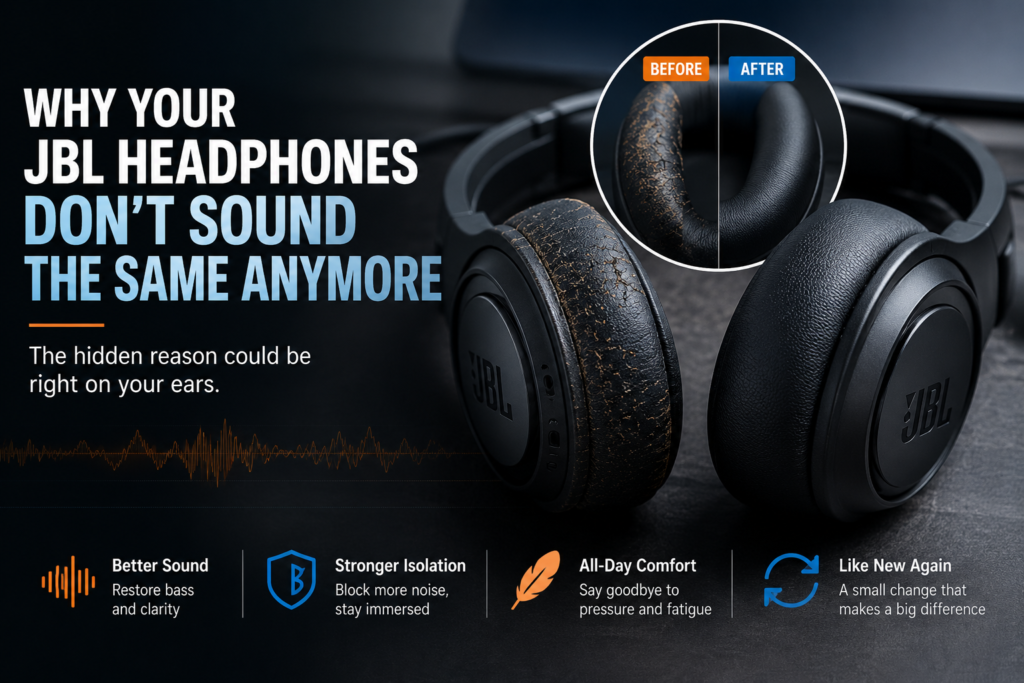
Headphones rarely fail overnight. In most cases, the sound slowly changes over time bass feels weaker, outside noise becomes more noticeable, and long listening sessions start feeling uncomfortable. Many JBL headset owners assume the speakers are wearing out, when in reality the issue often comes from something much simpler: worn ear pads.
Why JBL Headphones Slowly Lose Comfort and Sound Quality Over Time
Most people think headphones stop performing properly because the speakers wear out. In reality, the problem often comes from the part users touch every single day: the ear pads.
On many JBL headphones and gaming headsets, the original ear cushions gradually compress after months of use. The foam becomes flatter, the outer material starts peeling, and the seal around the ears weakens little by little. Because the change happens progressively, many users do not immediately notice how much comfort and audio quality has been lost.
This is especially common on gaming headsets used for:
- long Discord sessions
- competitive gaming
- remote work
- music production
- streaming
- travel and commuting
The more frequently headphones are worn, the faster the ear cushions naturally deteriorate.
The Hidden Impact of Worn Ear Pads
Old ear pads do far more than simply look worn out.
A damaged or flattened cushion can directly affect:
- bass response
- passive noise isolation
- ANC efficiency
- stereo positioning
- ear pressure distribution
- long-session comfort
When ear cushions no longer create a proper seal around the ears, sound leakage increases significantly. Bass frequencies are usually the first thing affected. Many users describe their headphones as sounding “thinner,” “weaker,” or “less immersive” compared to when they were new.
This issue is particularly noticeable on JBL gaming headsets and wireless headphones designed to deliver strong low-end performance.
Replacing the cushions often restores:
- deeper bass
- improved isolation
- clearer sound perception
- more stable positioning in games
- better immersion overall
For many users, changing ear pads can make a headset feel surprisingly close to brand new again.
Comfort Problems Usually Start With the Ear Cushions
Another common issue appears during long listening sessions.
As the original foam compresses, pressure points become much stronger around the ears and head. Instead of distributing pressure evenly, old cushions push harder against specific areas, causing discomfort after only a short time.
Typical symptoms include:
- ears touching the drivers
- pain on the upper ear cartilage
- overheating
- sweating
- irritation from peeling leatherette
- headaches during long gaming sessions
This becomes even worse during summer or extended competitive gaming sessions.
Many JBL owners only realize how worn their cushions were after installing a fresh pair and immediately noticing:
- softer support
- thicker cushioning
- improved breathability
- reduced ear fatigue
Why Replacing Ear Pads Is Often Better Than Replacing the Headphones
A large number of perfectly functional headphones are discarded every year even though the speakers themselves still work perfectly.
In many situations:
- the battery is still good
- the drivers still sound excellent
- the structure remains solid
The real problem is simply the deteriorated ear cushions.
Replacing ear pads is often one of the easiest and most cost-effective ways to restore a headset without spending hundreds of dollars on a completely new model.
For users searching for compatible JBL replacement cushions, collections such as these JBL headphone ear pads can help identify compatible options for many popular JBL models, including gaming headsets, wireless headphones and everyday listening headphones.
Material Choice Changes Both Comfort and Sound
Not all ear pads feel or sound the same.
The material used can significantly change:
- heat buildup
- comfort
- isolation
- perceived bass response
- overall listening experience
PU Leather / Leatherette Ear Pads
PU leather remains one of the most popular options because it creates a stronger acoustic seal around the ears.
Advantages include:
- stronger bass perception
- improved passive isolation
- better ANC efficiency
- easy cleaning
- immersive sound feel
This material is especially appreciated by:
- gamers
- travelers
- office users
- people using ANC headphones
Velour Ear Pads
Velour ear cushions prioritize airflow and softness.
They are often preferred for:
- long gaming sessions
- hot environments
- reduced sweating
- softer skin contact
Many users also appreciate the slightly more open sound presentation that velour can provide.
Cooling Gel Ear Pads
Cooling gel cushions are increasingly popular among gamers and users wearing headsets for many hours per day.
Benefits often include:
- reduced heat buildup
- cooler skin contact
- premium comfort feel
- improved long-session wearability
For competitive gamers or remote workers spending entire days with a headset, cooling gel cushions can make a major difference.
Ear Pad Thickness Also Affects Audio Performance
One detail many people overlook is ear-to-driver distance.
Thicker ear pads slightly increase the distance between the ear and the headphone driver. This can subtly influence:
- soundstage perception
- bass intensity
- comfort
- ear clearance
Meanwhile, thinner or heavily compressed cushions often make headphones feel harsher and less spacious.
Gaming Headsets Are Particularly Affected
Gaming headsets tend to suffer faster ear pad deterioration because they are often used for extremely long sessions.
Competitive players may wear their headsets:
- 4 to 10 hours daily
- under warm conditions
- continuously for months or years
Over time, sweat, friction and compression gradually break down the original materials.
This is one reason many gamers notice:
- weaker directional audio
- less isolation
- more outside distractions
- declining comfort during ranked sessions
Fresh ear cushions can help restore immersion while also reducing fatigue during long gaming sessions.