
From hyper-realistic graphics to AI-powered NPCs, gaming technology is evolving at warp speed. Below is an overview of the biggest innovations that will redefine the future of video games.
Video games are not merely a pastime anymore, now they’re worlds. The industry has matured from pixely plumbers stomping on turtles in the past decades to vast open worlds that appear real. Technology is at the root of it all, constantly pushing the limits of what can be done through gameplay, storytelling and player interaction.
Today, gaming technology is at a fascinating crossroads. We’re seeing breakthroughs with artificial intelligence, cloud computing, haptic feedback and even brain-computer interfaces. Even game developers are not just pushing the boundaries of graphics, but also how we interact with and experience games. And if things already seemed wonderful with ray tracing, wait until you see what’s coming next, your mind will be blown.
Remaining in The Know
With all of the adjustments taking place, it becomes hard to keep up. That is why detailed online websites that are specifically for video gaming are becoming a reality. Websites that have up-to-date news and headlines from the video games, in addition to detailed reviews and comprehensive guides, are a hub of information for followers. Whether you’re curious about the latest console update, need hints for a difficult boss fight, or just want to follow industry trends, these websites keep you connected to what matters most.
Graphics That Blur Reality
Let’s start with the obvious: Visuals. The leap from the blocky PlayStation 1 era to the cinematic experiences of today is nothing short of insane. But it’s not slowing down. Modern GPUs now use ray tracing, a rendering technique that mimics the way light actually behaves in the real world. It makes reflections, shadows and lighting look eerily realistic. Games like Cyberpunk 2077 and Alan Wake II showcase just how far we’ve come.
But here’s the kicker, this isn’t just about raw power. With DLSS (Deep Learning Super Sampling) from NVIDIA and FSR (FidelityFX Super Resolution) from AMD, we’re seeing AI step into upscale graphics in real-time. That means buttery-smooth gameplay without compromising quality. Instead of throwing more brute force at the problem, developers are leaning on machine learning to make graphics smarter.
The Rise of AI in Gameplay
AI isn’t just improving graphics, it’s changing gameplay itself. NPCs (non-playable characters) used to be predictable, spewing the same monologue over and over again. Now, thanks to natural language models and procedural generation, NPCs are getting more life.
Imagine walking into a fantasy RPG town and having a completely unscripted conversation with a shop owner, who not only recognizes you but also adapts to your play. That’s the kind of future that AI is creating. The studios are already experimenting with this, experimenting with chat-based interaction that sounds more natural than ever.
And it’s not even for immersion’s sake, AI is being used behind the scenes to balance multiplayer gaming, catch cheats and even render massive open-world environments in fractions of what it used to take.
Cloud Gaming and The Death of Consoles?
Alright, don’t panic yet, your Xbox and PlayStation aren’t dying tomorrow. But cloud gaming is definitely on the rise. Services like Xbox Cloud Gaming (part of Game Pass) and NVIDIA GeForce Now are proving that you don’t need to shell out $2,000 for a PC in order to play high-quality games. You just need a decent internet connection, and you can stream games directly onto your laptop, phone or even TV.
This would flip everything on its head. Instead of needing to upgrade hardware every couple of years, players would just subscribe. Visualize it like Netflix, but interactive realities. Not that specialty hardware is going away, but differences between platforms are disappearing.
VR, AR and The Metaverse Hype
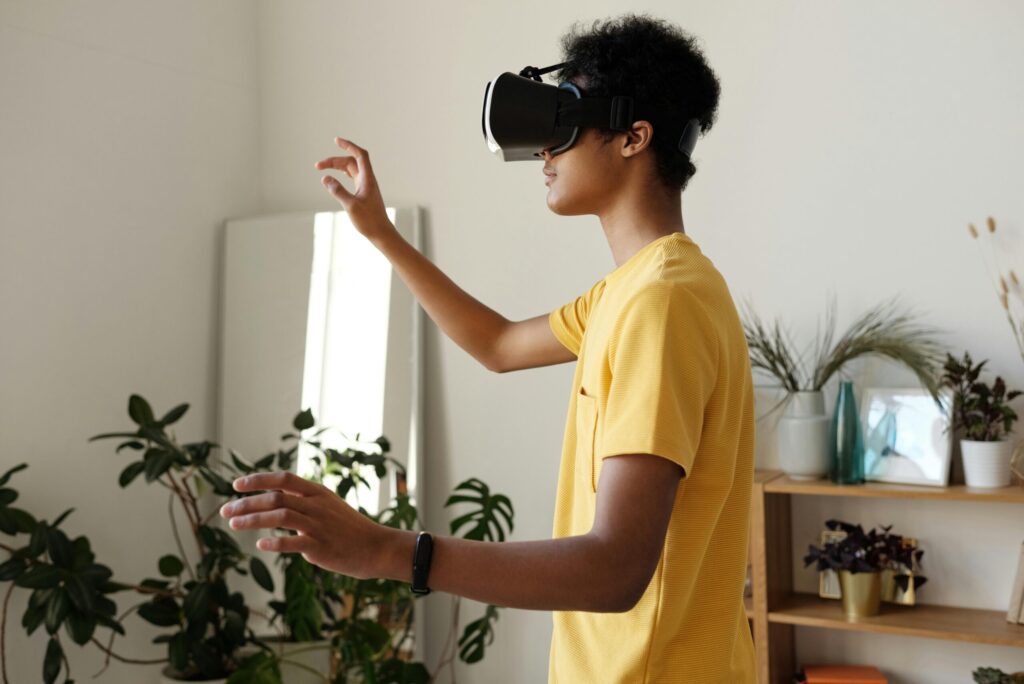
Virtual reality has been “the next big thing” for several years, but it’s now reaching its stride. The Meta Quest 3 and PlayStation VR2 prove that VR gaming is no longer a novelty but increasingly accessible and polished. Immersive shooters, rhythm games and social hangouts are proving VR’s longevity.
Meanwhile, augmented reality (AR) is creeping into the scene. Remember Pokémon GO? That was just the start. Future AR gaming could blend physical and digital spaces in ways that make our world the playing field. Combine this with wearable tech, and suddenly your daily walk could turn into a dungeon crawl.
And then there’s the always-debated “Metaverse.” Some believe it’s nothing more than a marketing term, but persistent online worlds where work, social life and games all overlap don’t seem like such a far-off idea. Roblox and Fortnite are already testing the waters on that vision.
Feeling the game: Haptics and beyond
If graphics and sound attract you, haptics provide the sensation. Controllers also now feature adaptive triggers and haptic feedback that simulate anything from the tension of a bowstring to the feel of crunching gravel. Sony’s DualSense controller leads the way here and players love it.
But then there are controllers. Companies are testing out haptic full-body suits and VR treadmills. Imagine literally feeling a gun’s kick or the sword clashing. It’s nuts, and it’s early and pricey, but the possibilities are huge.
What’s Next: What’s on The Horizon
So, what is the future? Here are some informed guesses:
- AI-written stories that make every playthrough unique.
- Hyper-personalized gaming worlds where difficulty, story and even gameplay mechanics change in response to what you do.
- Smaller but smarter devices; wearables, AR glasses and portable consoles that are just as capable as today’s best high-end rigs.
- Platform-morphing worlds where your avatar, saves and online presence transfer seamlessly from one game and platform to the next.